The Next Killer Coffee Maker in a Post Green Mountain World

Earlier in the week, I spent some time over at the Microsoft offices in NYC.

They had a $SBUX coffee machine over there easier to operate than a Keurig that made freshly ground coffee. It was awesome.

Here’s the photo I snapped of it:

It made a good cup of coffee and I want something like it.

The problem with the Keurig is that it makes a mediocre cup of coffee from beans that have been ground and vacuum packed for God knows how long and, in light of $GMCR blowing up last night, it appears the scales have finally shifted from convenience to quality.

The next monster hit will sacrifice neither.

The $SBUX machine is called The Starbucks Interactive Brewer and it is a part of their Office Coffee Solutions. You pay a monthly fee and they provide the machine and service it. Its great for large companies such as $MSFT that can afford it but way too large and expensive for the home. Here’s the video promo for it:

Wow!

The next great machine will deliver both convenience and quality and I will be first in line. You will press a button and it will grind the beans for you and make you the killer cup.

$SBUX or another company such as $GMCR or Braun or Cuisinart or whoever will make this machine and sell it for less than 500$ and it will be the next big thing…

What’s likely holding $SBUX or $GMCR back now is that it does not make economic sense for them to mass produce such a machine unless they can also lock you into buying their coffee.

The solution there will be to sell the beans in special 5lb containers that are home delievered and fit right into the machine the same way the top load home water coolers do.

They gotta be working on this.


Frontline’s Financial Crisis Series Is Epic

Frontline’s four part series on the financial crisis entitled Money, Power and Wall Street is thorough, smart and riveting and all of the episodes are available here.  It is the very best television has to offer.

PBS does an amazing job on their website too and includes a special section with full length interviews of such key figures as Austan Goolsbee, Richard Kovacevich, Robert Wolf and others.

I’ve embedded Part 4 below and it is an amazing watch.  It will bump you over to pbsdotorg around the 13 minute mark to watch the rest of the episode.

$WFC $JPM $XLF


Ethics vs. Alpha on Barnes & Noble

As the awesome Joey Kunkle noted this morning, last Monday saw a huge call buyer in $BKS.

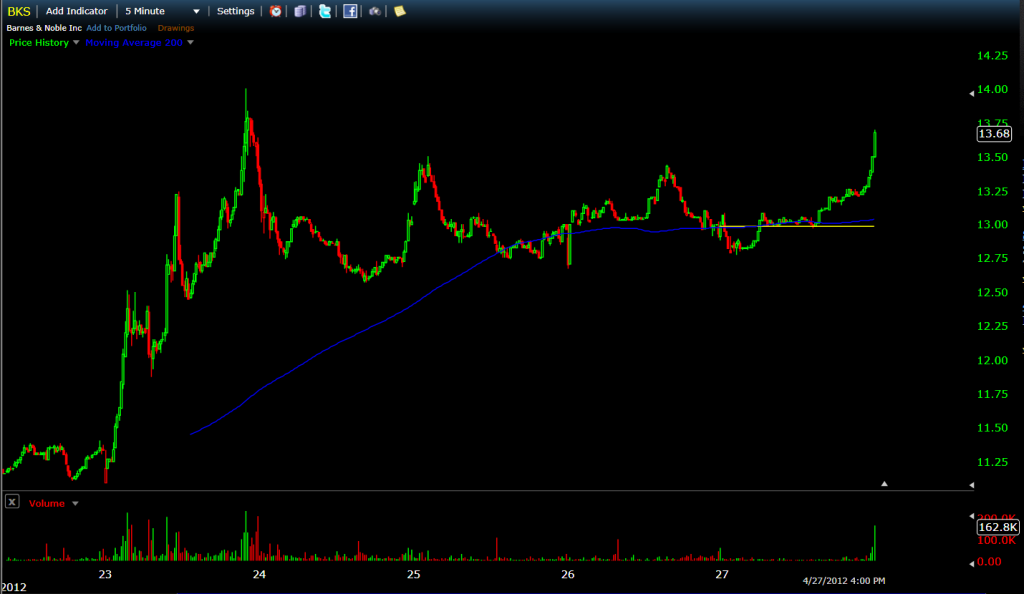
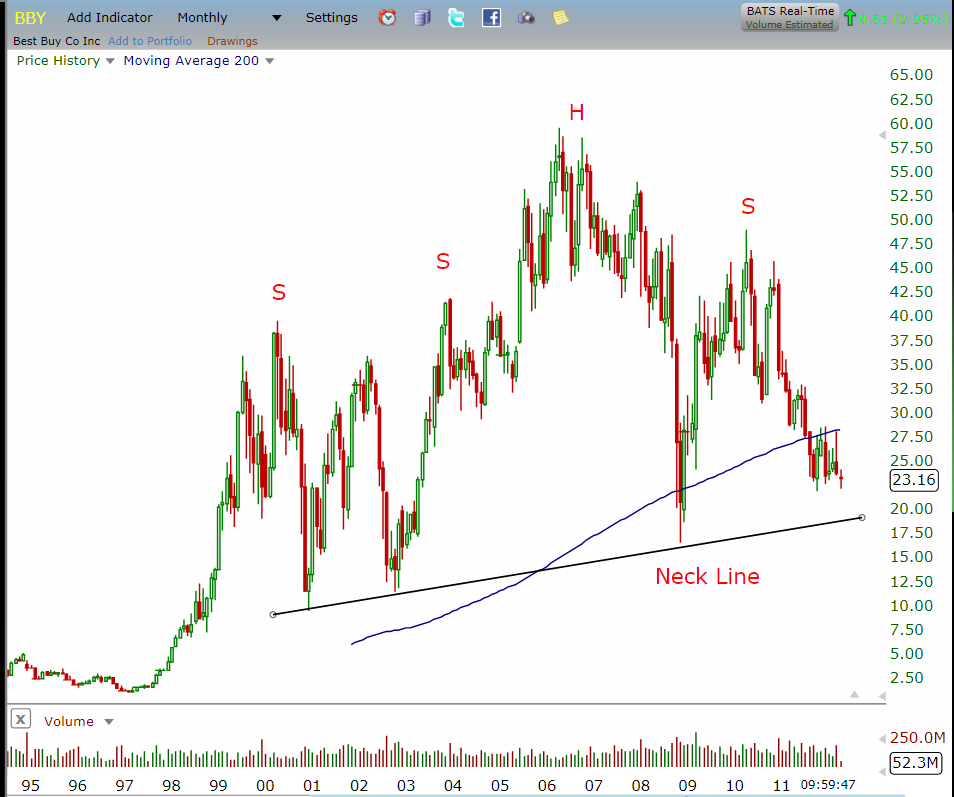
Reviewing last week’s $BKS chart, we are able to speculate further that someone may have known something before news of $MSFT’s investment was made public this morning and was trading off of it.

While I don’t condone insider trading and find it as abhorrent as most, I also recognize that information flow has always occurred this way and likely will continue to.

The upshot here is that those who analyze options and price/volume behavior with a keen eye on unusual activity can gain an advantage that is fair as they are observing publicly available data.


Full Albums on YouTube Are Ridiculous

Has anyone else noticed that recently more and more full albums are popping up on YouTube?

The majority appear to have been posted in the last couple months. I’m not sure what the deal is or if it will last but who cares? Its light weight simple search accidental discovery listening goodness.

Just start by searching “full albums” on YouTube or album titles if you are looking for something in particular or artists name + full album if you are looking for particular artists.

Here are a few I am psyched about recently finding:

The Beatles – Revolver


A Tribe Called Quest – Midnight Marauders


Antonio Carlos Jobim – Wave


Fleetwood Mac – Rumours


Trading in the Wild

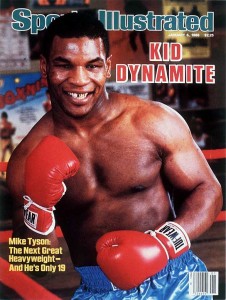
Everybody has a plan until they get punched in the face

– Mike Tyson

Its been more than 30 years since Kahneman & Tversky validated man’s innate propensity to be irrationally loss averse.

And since then, thousands of studies have been conducted that detail every way people act which leads to unnecessary draw downs.

(We avoid loss realization, we take mental shortcuts, we get over confident, we neglect information that runs counter to our thesis… etc etc.)

Yet markets remain irrational and investors continue to behave in ways that run counter to their own best interests.  Our new understanding has done little good and this will continue as long as humans are involved in markets and no matter how much empirical knowledge we gain regarding our limitations.

Computerized (and HFT) trading, which has come to dominate daily volume, will not save us as we have seen as there are people behind the curtain who must construct the algorithms, enable the computers and ultimately assume the risk.

Even on the level of economic policy it is no different. Some of the smartest minds in the world appear ill equipped to make decisions which serve long term best interests as leaders around the world also tend to “kick the can” in order to avoid experiencing the pain associated with losses in the present.

Truth is, understanding our own limitations and intellectualization does little to curb irrational behavior.

Only real world experience and a propensity to learn new responses to uncomfortable situations can enable a process by which traders can successfully navigate markets.

The taste of one’s own blood after getting punched in the face…

A small percentage of traders will learn over time from their own mistakes and will begin to act counter to their own hard wired and detrimental impulses.

There’s only one path to curbing the tendencies and it doesnt come from learning about why we do stupid things with money especially when we are losing.

It comes from stepping in the ring, getting knocked down and then getting up again…

***

If you are a student or faculty up in the Boston area, please join us on May 8th at The StockTwits Symposium at Harvard University: Trading in the Wild. I will be discussing trading psychology and preparing for battle in the ring and will be joined by a group of super smart and experienced investors including Josh Brown, Todd Sullivan and JC Parets. 

It should be excellent.  There are only a few spots remaining and you can sign up HERE

(ht: AnneMarieTrades who hit me with that great Mike Tyson quote some time ago.)

Scott Thompson’s First Yahoo! Earnings Call Is All About Leadership

Last night, Yahoo! ($YHOO) reported its first quarter of year over year net revenue growth since 2008.

The stock is trading 3% higher but I think this pop has more to do with the perception of Scott Thompson’s performance on the call than the numbers or guidance.

There’s nothing more important than the quality of the person running the company. Everything trickles down. This is especially true for Yahoo! a company that has been mismanaged since Terry Semel’s Bar Mitzvah…

So with a new CEO, investors including myself, are looking to measure how Thompson is doing. Does he have a handle on the business? Does he command respect? Does he have a plan?

In my opinion, Thompson presented well.

He understands that major operational cuts need to be made. He has already begun reducing headcount and also stated that he would shutter 50 Yahoo! properties that were under performing or contributing little to the bottom line. Bigger picture, he promised to simplify the company organizationally and technologically.

He pledged to invigorate mobile – an area of obvious strategic importance in which Yahoo! has astonishingly dropped the ball and promised to lead in categories in which Yahoo! leads on the web (no small promise!).

In addition, he came off like he was in control. This is a huge part of leadership – looking like the leader. Its mandatory and with his prior success at PayPal, there is something to build on in terms of commanding the role of Yahoo’s CEO.

In all, Thompson advanced rational change in a tone and conveyed initial command. This is a good start and to my mind is responsible for the majority of the gain in Yahoo’s stock price so far today.

So a dose of clarity and leadership goes a long way for now, but this will not last long without concrete results and a follow through on commitments to improve the organization, mobile, search, engagement and the like.

(photo via Mashable)

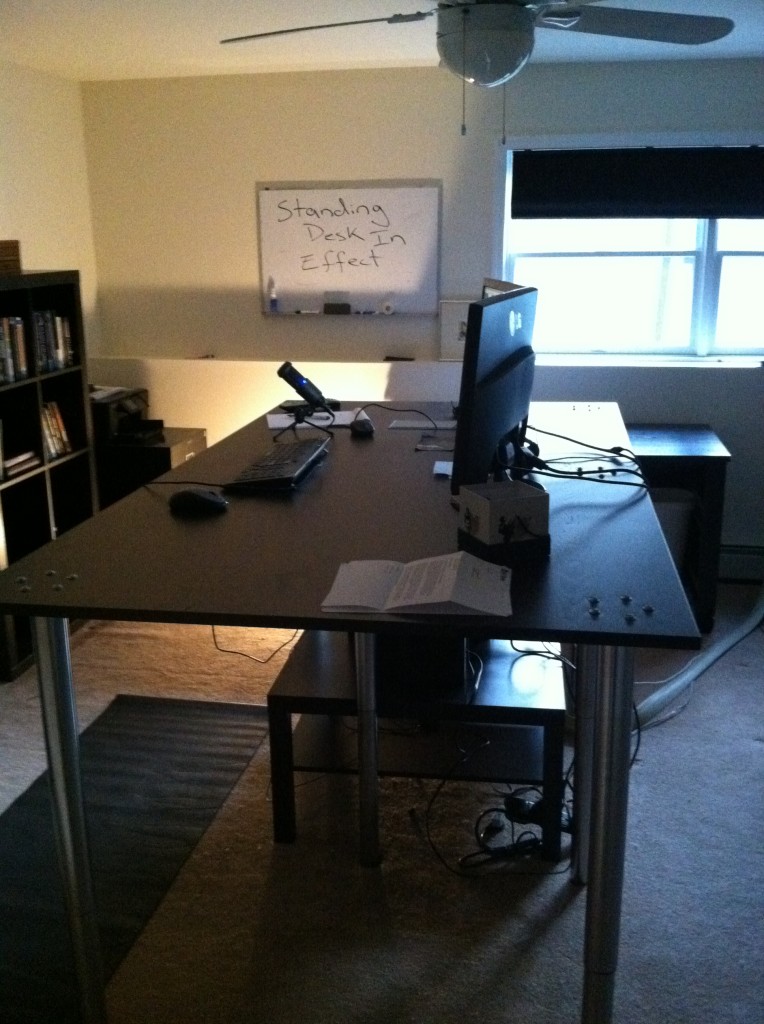
Standing Desk in Effect for the Home Office

By now I am guessing that most of you have read about the negative health effects of sitting all day and the subsequent and increasing popularity of standing desks.

I recently built a large standing desk for the home office where I spend many hours and am finding this to be a great hack so I am sharing some of the details.

Materials

I bought the desk and legs at Ikea. The desk is the 77 inch by 43 inch Galant in black. I bought the desk only without the frame or legs for under 200$.

I bought 6 of the Vika Byske chrome legs which are height adjustable to 42 inches for 30$ each.

I bought a black Lack coffee table (31 inches x 31 inches) for 30$.

Assembly

I hired our handyman Pat to help me and I am grateful as I would have never been able to do this without him but if you are handy (I am not), you should not have too much trouble.

We drilled five sets of five holes to match the holes at the top of the Vika Byske legs. Four of them at the corners of the desks and one at the back middle. We then screwed the legs to the desks (see pic below).

In the middle of the desk, we attached one of the legs to a wood block and then screwed the block to the bottom of the desk (see pic below). This lends support to the desk without having the screws appear on top in the middle of it which might get in the way.

I assembled the coffee table all by myself 🙂 which fits perfectly beneath the table and I am using that for the computer tower and woofer.

Use

Its been two weeks since I began using the standing desk full time.

I was a little bit concerned about the stability of it given the height but so far it is very stable. I think the two extra legs are key.

I am loving the size of the desk which allows me to fit 2 large screens and a laptop on it with plenty of room to spare.

So far, I am more active and mobile throughout the day and will occasionally do a few jumping jacks just to keep myself from standing still for too long.

I find I have more energy later in the day. I work in socks or bare feet and stand on the yoga mat and so far no foot or knee problems.

All in and including the handyman the cost was around 500$ which I think is inexpensive compared to other solutions I was looking at.

I recommend this for traders or others who sit at their desks a lot of hours.


Notes for Developing Financial Bloggers I: You Are Your Brand

Everyday, I talk with financial bloggers at various stages of development. I get to know them, what they are working on, what motivates them and how they perceive the environment and their roles within it.

Some of the bloggers I will work with more formally as they join the StockTwits Blog Network but many times we simply connect, chat and devlop a dialog.

Its a great part of my gig and not only have I built relationships with people I respect immensely but also I learn a lot about how to blog, share best ideas and build a great brand.

Over the next couple weeks, I will offer some observations and advice for financial bloggers who want to do it right.

The place to start is here: You Are Your Brand

Technology has spurred a major shift since before the launch of Blogger in 1999. Web based publishing tools have made it incredibly easy for an individual with great ideas and dedication to reach others across the globe who are interested and to grow an audience.

Back in 2009, I wrote the following:

People can now take the effort to craft their identity and evolve it over time through the expression of their ideas. What’s more we can do this in a global public space in which others might respond with their own ideas ensuing a dialog which has the potential to inform, inspire, provoke and ultimately foster knowledge and relationships…

…The upshot is that thinkers across an endless variety of subjects who engage might arise and initiate new knowledge systems which are meritocratic.

Along the way, leaders will emerge who have been vetted more purely than ever before.

We are a witness to and a part of a constructivist revolution in which individuals now have the power to define themselves with their best thoughts.

I stand by that assessment and while it is 3 years later, I think we are still very early in this secular shift in the media landscape from institutional journalism towards individual journalism.

Recently, Josh Brown was interviewed by Forbes and he sums it up very nicely in terms of how this shift affects financial journalism and the individual. (The riff begins at the 6:45 mark and its good).

There are a number of steps you can take in order to bring yourself to the foreground and accentuate You as your brand. Here are a few of the basics:

1. Define Yourself – Self definition and discovery are continuous processes. Still, You will want to clarify some things clearly before you get going which You will no doubt revisit later on.

What are your goals for the site?

Who do you want to reach?

What is it you are most knowledgable about and what types of things do you want to communicate?

What would you like to achieve?

These can change over time and they will but having some idea and specifying them will help you create a site that is congruent with your definition and goals. You will then want the format and style of your blog to follow the function and purpose you have delineated.

2. Make Your Web Presence a Blog First – If the landing page to your site is static, people might visit once but they will not return frequently and they will never be engaged. But, if you update your home page frequently with new and great ideas, then people will come back and get to know who you are and how you view markets and the world.

3. Begin with a Very Simple Site – It is said that to play rock and roll, all you need is 3 chords and an attitude. The same is true in blogging. You want to begin with a simple site.

I recommend using WordPress but that is by no means mandatory.

You do not need a ton of tabs and pages. Home page (which is the blog), About page and Contact. That’s it. You can always add later. (I will write more on this in the next post).

4. Put your photo and bio on the home page – This is about You. Get out there and define yourself authentically and how you want to and then live up to that definition through your ideas.

Your photo on the home page is key as people recognize the human face above all other images.

5. Write About What You Know and Reveal Something About You – The financial blogosphere loves the long tail. If you are an expert in a very specific area of the markets and you write about it knowledgably, people from all over the globe who share your interests or who want to learn more will find you.

You can also write about outside interests. Kid Dynamite writes about farming and making beer and I love those posts. It allows people to know you better and also will bring about unexpected connections and foster serendipity.

6. Make Mistakes Publicly – Anyone with even a little bit of experience in the market realizes that everyone makes bad trades. When you write about your mistakes, people connect with you more not less. Also, you learn from processing your own errors.

7. Use a Good Comments System – Install Disqus and respond to comments on your blog. They foster relationships. You will learn from your readers and they will keep you honest and humble.

Next up, I will discuss more about the design of the financial blog itself…


Bubba Watson Hits One of the Greatest Shots in the History of Golf at the Masters

Bubba Watson’s 2nd shot on the 10th and 2nd playoff hole at the Masters was one of the greatest shots in the history of golf.

After hitting his first into the trees he miraculously hooked a wedge onto the green from 150 yards and then two putted for his first major win.

In this clip, you can see the ball hooking and the english once it hits the ground.

Ridiculous.


Load More Posts